 thearchivist.fun
RSS 2.0 helps readers follow publications across the Web
RSS 2.0 provided a shared feed format for distributing updates beyond a site's own pages.
Context and provenance
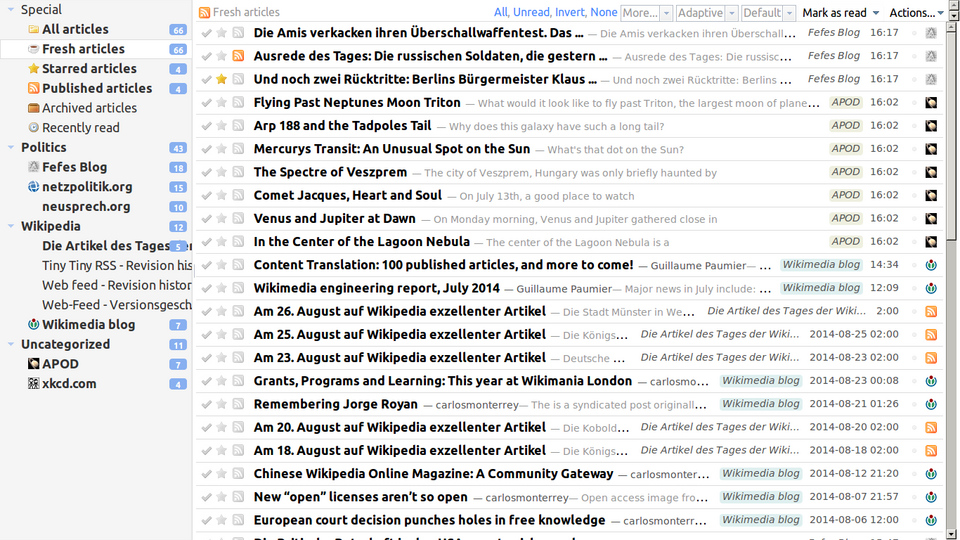
RSS 2.0 appeared in 2002 within a longer history of feed formats, including earlier work at Netscape and UserLand. An RSS feed describes a channel and items that reading software can collect, allowing people to follow updates from multiple publishers in one place. The RSS Advisory Board's history records later revisions and the transfer of specification stewardship. The distinction between a publication and its feed is useful: a site can keep its own identity while making new material discoverable through another interface. The format's history also shows that a simple-looking subscription experience depends on agreements about how updates are represented.
Why it matters
Editorial perspective: A feed gives readers a way to assemble their own information environment. It separates following a publication from repeatedly visiting its front page, creating room for different reading tools and personal habits.