 thearchivist.fun
A proposal connects documents across institutions
Tim Berners-Lee proposed an information system at CERN that became the World Wide Web.
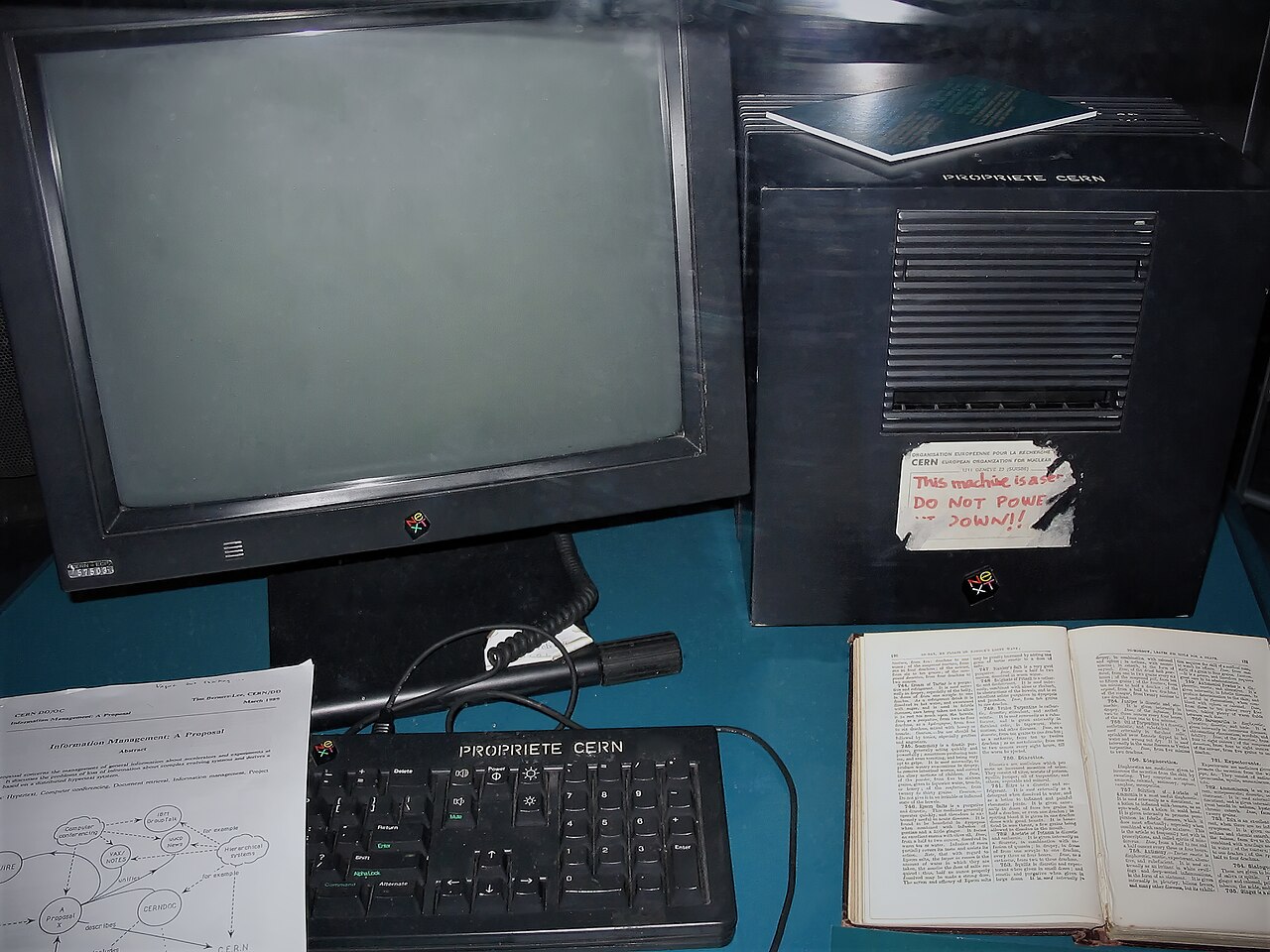
Context and provenance
In 1989, Tim Berners-Lee proposed a system for managing linked information while working at CERN. The setting mattered: researchers collaborated across institutions, used different computers, and needed ways to connect documents without making every piece belong to one central arrangement. The idea developed into the World Wide Web, bringing internet networking together with hypertext. By the end of 1990, the first server and browser had been created. The Web should therefore be distinguished from the internet beneath it. It offered a particular way of publishing, locating, and following information across connected machines rather than inventing the underlying network itself.
Why it matters
Editorial perspective: The Web's origin suggests that useful openness often begins with an ordinary coordination problem. Making information connect across organizational boundaries can produce a more consequential result than building a perfect collection inside one institution.