 thearchivist.fun
ENIAC makes electronic computing public
ENIAC made the speed and labor of electronic computation visible to a wider public in 1946.
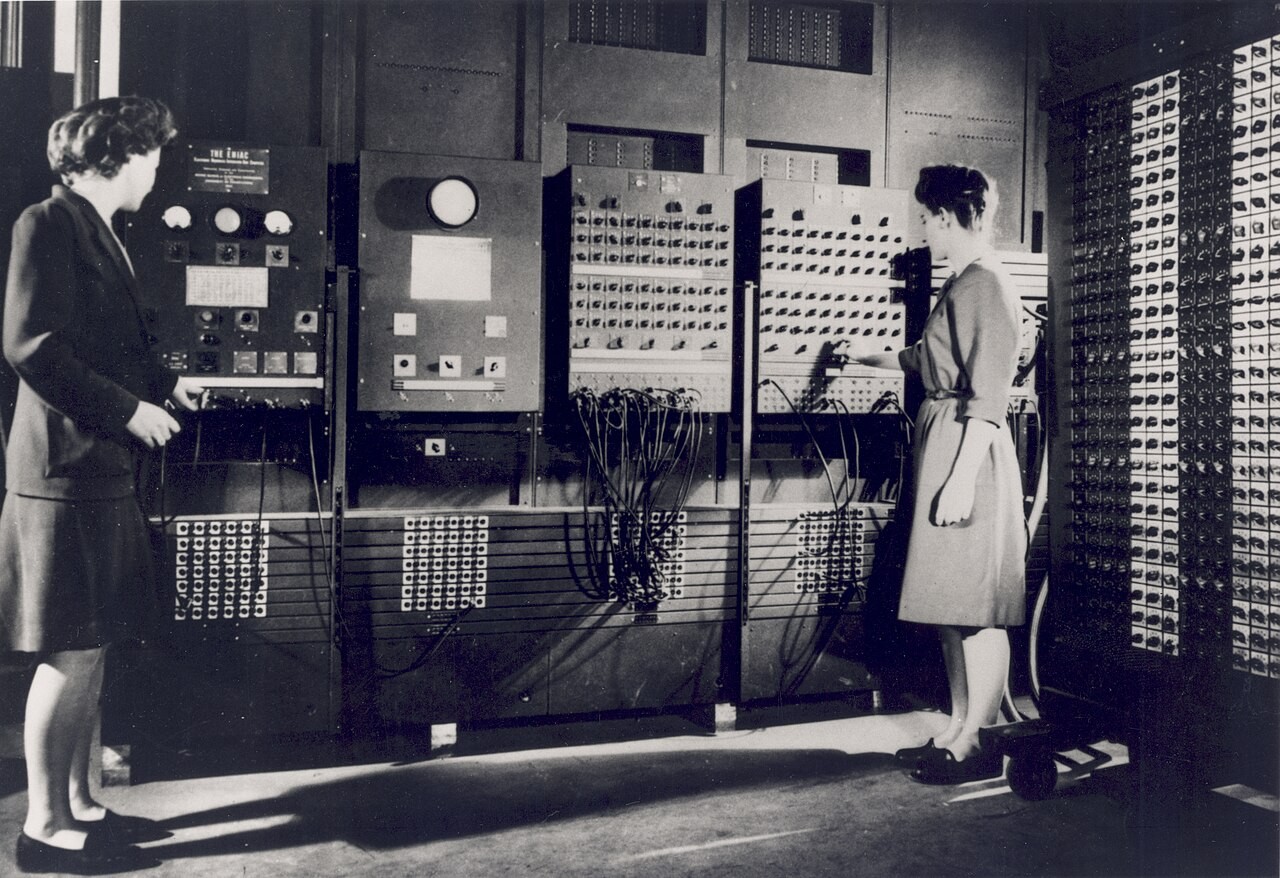
Context and provenance
Built during the Second World War to address demanding calculations, ENIAC became public knowledge in 1946. Its electronic arithmetic offered a dramatic increase in speed, but preparing a new problem remained a physical and intellectual task. Programmers planned the configuration, connected cables, and set switches; this preparation could take days. The machine contained roughly 18,000 vacuum tubes, so reliable operation also depended on careful engineering and maintenance. Photographs often foreground the enormous hardware, while the Computer History Museum identifies programmers including Frances Bilas and Betty Jean Jennings. ENIAC is therefore a story about people organizing computation as much as a story about faster components.
Why it matters
Editorial perspective: The contrast between rapid execution and slow preparation still matters. A powerful machine is not automatically an accessible tool; interfaces, documentation, and the recognition of skilled human work determine who can actually use it.