 thearchivist.fun
Harlem Shake provides a reusable script
A two-part video structure let different groups perform recognizably the same joke.
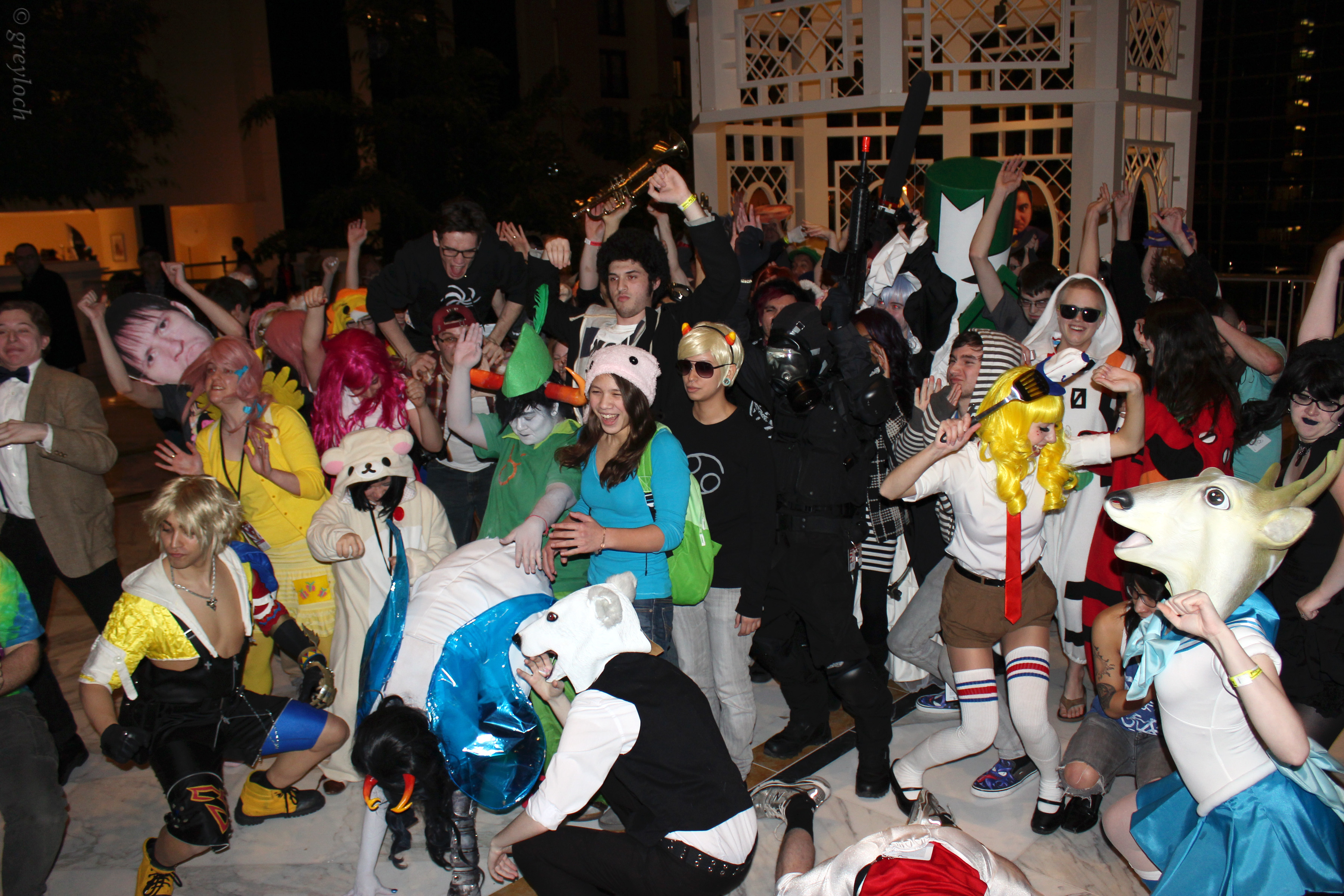
Context and provenance
The viral Harlem Shake trend spread in February 2013 around a track by Baauer. Typically, one person moves while others seem indifferent; after a musical transition, the whole scene becomes chaotic. This before-and-after structure let groups produce editions in offices, dormitories, and other familiar settings. YouTube's contemporary trend report documented the rapid appearance of thousands of variations. The online format should be distinguished from the earlier Harlem dance tradition whose name it used. Participants mainly reproduced a video convention with a prescribed transition rather than demonstrating that original dance. The format's recognizable timing held together variations whose costumes, locations, and gestures could differ substantially.
Why it matters
The invitation offered clear instructions and room for local invention. A group could replace almost every visible detail while preserving enough timing for viewers to recognize its contribution to a larger phenomenon.