 thearchivist.fun
Rickrolling makes the link the joke
A misleading hyperlink transformed a music video into a social ritual.
Context and provenance
Rickrolling makes a relationship between a promise and a destination into the joke. A link appears to offer something relevant to the conversation; following it unexpectedly produces Rick Astley's music video for Never Gonna Give You Up. The song and video predate the prank. The widely used official YouTube upload is another, later object with its own publication history. Confusing the song's release, a particular upload, and the emergence of the linking practice makes the timeline look simpler than the evidence permits. [1, 2]
Know Your Meme documents the prank's association with 2007 imageboard culture and an earlier bait-and-switch pattern known as duckrolling. That chronology is an editorial reconstruction built from surviving examples and references. It offers useful leads, but an unstable forum archive is not a complete census of who first redirected a link. The cautious claim is that the documented practice spread through such communities, not that every later Rickroll has one demonstrable ancestor. [1]
YouTube's own December 2008 retrospective describes Rickrolling and recalls its April Fools' participation, when featured links were directed to Astley's video. This is strong contemporary evidence of platform-level amplification: the operator adopted a user practice and exposed it through the interface itself. The retrospective also refers to an appearance in the Macy's parade, showing how recognition could move beyond a hidden hyperlink into a public performance. [3]
Editorial reading: the crucial unit is the reveal. The viewer must form an expectation, encounter a mismatch, and recognize the substituted object. A bare music video is not necessarily a Rickroll. Conversely, a performance or visual quotation may reproduce the reveal without using the familiar URL. Studying only the destination file misses the social arrangement that makes the prank legible.
The sender's relationship with the audience matters. A playful interruption among friends and a misleading link in urgent information can use the same mechanism while producing different reactions. This archive describes the historical convention without treating every use as equally welcome. The repetition is part of its durability: knowing the joke can make recognition pleasurable even when surprise has disappeared. A recognizable introduction or fragment can be sufficient to signal what is happening.
Archival documentation should capture the bait as well as the destination: link label, surrounding post, date, destination at capture time, and whether the destination subsequently changed. A screenshot of Astley alone proves neither the promise nor the redirect. A present-day video view counter likewise cannot measure the total number of pranks, because it includes intentional listening and excludes other copies and offline performances.
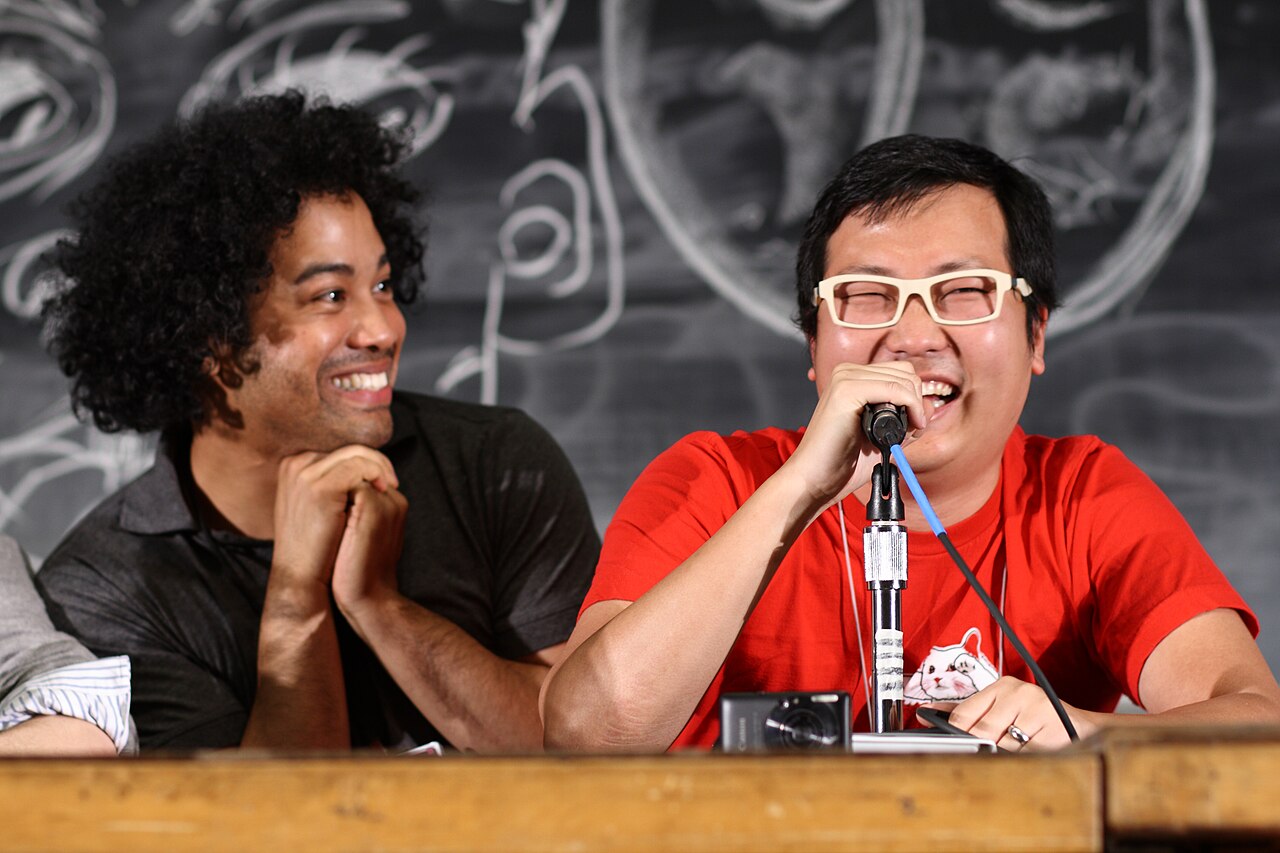
The official music video is linked here as a primary cultural object, not copied as an unlicensed downloadable asset. Our related conference photograph documents a setting where internet culture was discussed; it is not a picture of the first Rickroll. Preserving those distinctions helps readers move from a remembered joke toward evidence about the actual event they are investigating.
Transmission timeline
- 1987
The song and music video precede the internet linking practice.
- 2007
Surviving references place the emerging Rickroll practice in imageboard circulation.
- 2008-04-01
YouTube adopts the prank in its featured links, as recorded in its year-end retrospective.
- 2008-12-22
YouTube publishes its contemporary account of the year’s viral videos.
Variants and adaptations
- Disguised hyperlink
The anticipated destination is replaced by the familiar music video.
- Public performance
A staged reveal moves the recognized interruption beyond a browser link.
- Minimal quotation
A recognizable fragment can invoke the joke for an audience already familiar with it.
Why it matters
The prank shows that a meme can reside in navigation and expectation rather than in edits to the underlying media.
What remains uncertain
Early forum chronology is reconstructed and incomplete. Current upload dates and view counts cannot establish the first prank or count all Rickrolls.
Sources and evidence
- Know Your Meme: Rickroll chronology
Early circulation and relationship to duckrolling.
- Rick Astley: official music video
The recognizable destination video.
- YouTube: 2008 year-end video roundup
YouTube’s April Fools’ participation and recognition of the prank in 2008.
Original works and visual references
These links lead to the original publications. Linking does not grant permission to reuse their images.
- Watch the official Rick Astley video
Prank destination; no claim that this upload is the earliest circulating copy.
Copyrighted video; linked on the official channel.
Editorial review: 2026-09-23. New evidence may change this account.